
Internet security is one of the most important things website owners need to pay attention to. In a rapidly growing world of cyber threats, they need a clear understanding of how to prevent data breaches and protect their resources from third-party access.
Installing an SSL certificate has become a modern standard for site security. However, this protection mechanism is relatively new and complex for the end user. So what is this technology, and how does it secure information on web resources?
What is an SSL Certificate?
Before understanding why a website needs an SSL certificate, it helps to understand the concept of the SSL protocol. SSL (Secure Sockets Layer) is a cryptographic protocol that provides secure data transmission over a network. It guarantees a secure connection between the user's browser and the web resource.
HTTP vs HTTPS
HTTPS greatly improves data security compared to the HTTP protocol. Once an SSL certificate is installed on a site, all data is transmitted over HTTPS. HTTPS is the secure version of HTTP, encrypting user data as it's delivered to the site owner over the TCP transport protocol. In other words, all information sent by the user is hidden through encryption from third parties such as network operators, Wi-Fi administrators and internet service providers.
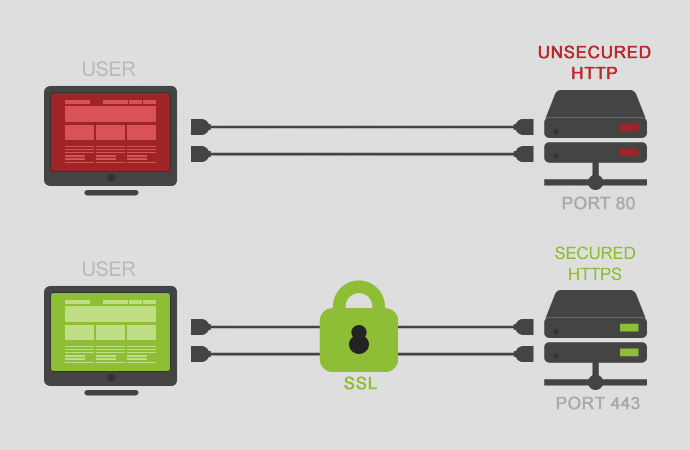
How Does the SSL Protocol Work?
At the heart of every encryption method is a key used to encrypt or decrypt information. The SSL protocol uses an asymmetric encryption method that works with two types of keys:
- Public Key: This is essentially the SSL certificate itself. It encrypts user information as it's sent to the server. For example, this key comes into play when a visitor enters their card number on a website and clicks "Pay".
- Private Key: Needed to decrypt the message on the server. It isn't transmitted with the information like the public key, and always stays stored on the server.
A website needs an SSL certificate in order to handle these kinds of connections. This certificate acts like a digital signature that's unique to each platform.
What Information Does an SSL Certificate Contain?
An SSL certificate can contain the following important information:
- The domain of the site the certificate is installed on;
- The name of the company that owns the site;
- The country and city the company is registered in;
- The SSL certificate's validity period;
- Information about the Certificate Authority (CA);
- The SSL's serial number;
- SAN entries (for Multi-Domain SSL);
- Trusted and untrusted certificates.
The main source of SSL certificates is trusted certificate authorities (CAs) or validation centers. These organizations hold undisputed authority in the IT services market and use a widely recognized public cryptographic key. The list of these authorities can usually be found in browsers under "Trusted Root Certification Authorities".
A digital signature obtained from these authorities proves the accuracy of the company that owns the domain name and its lawful right to use the private key. This is why it's considered trusted.
Can't find the answer you need?
Contact Us